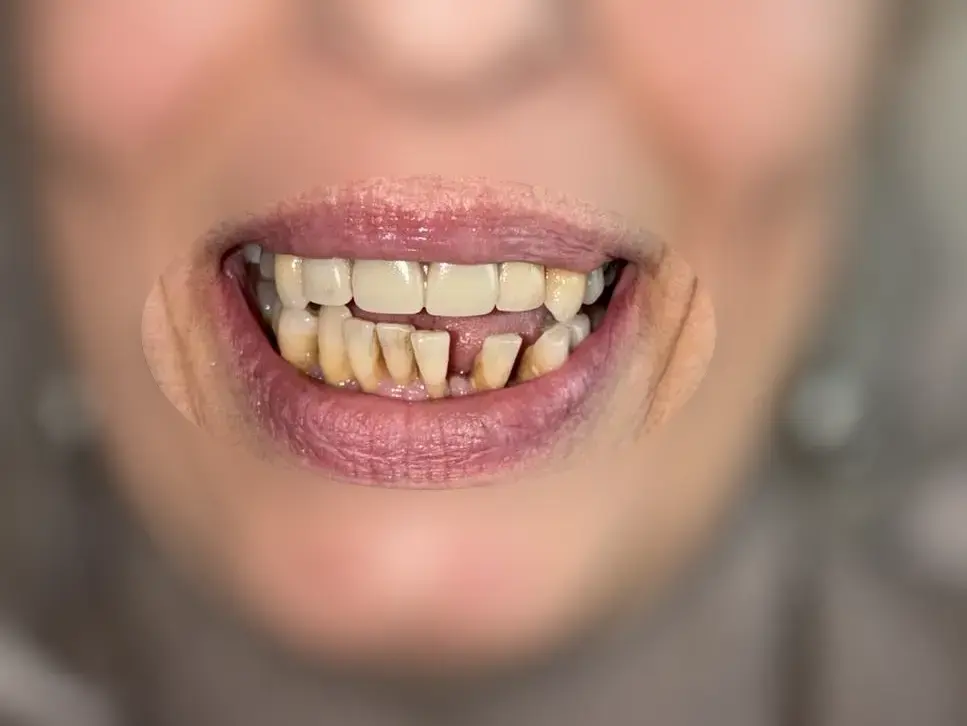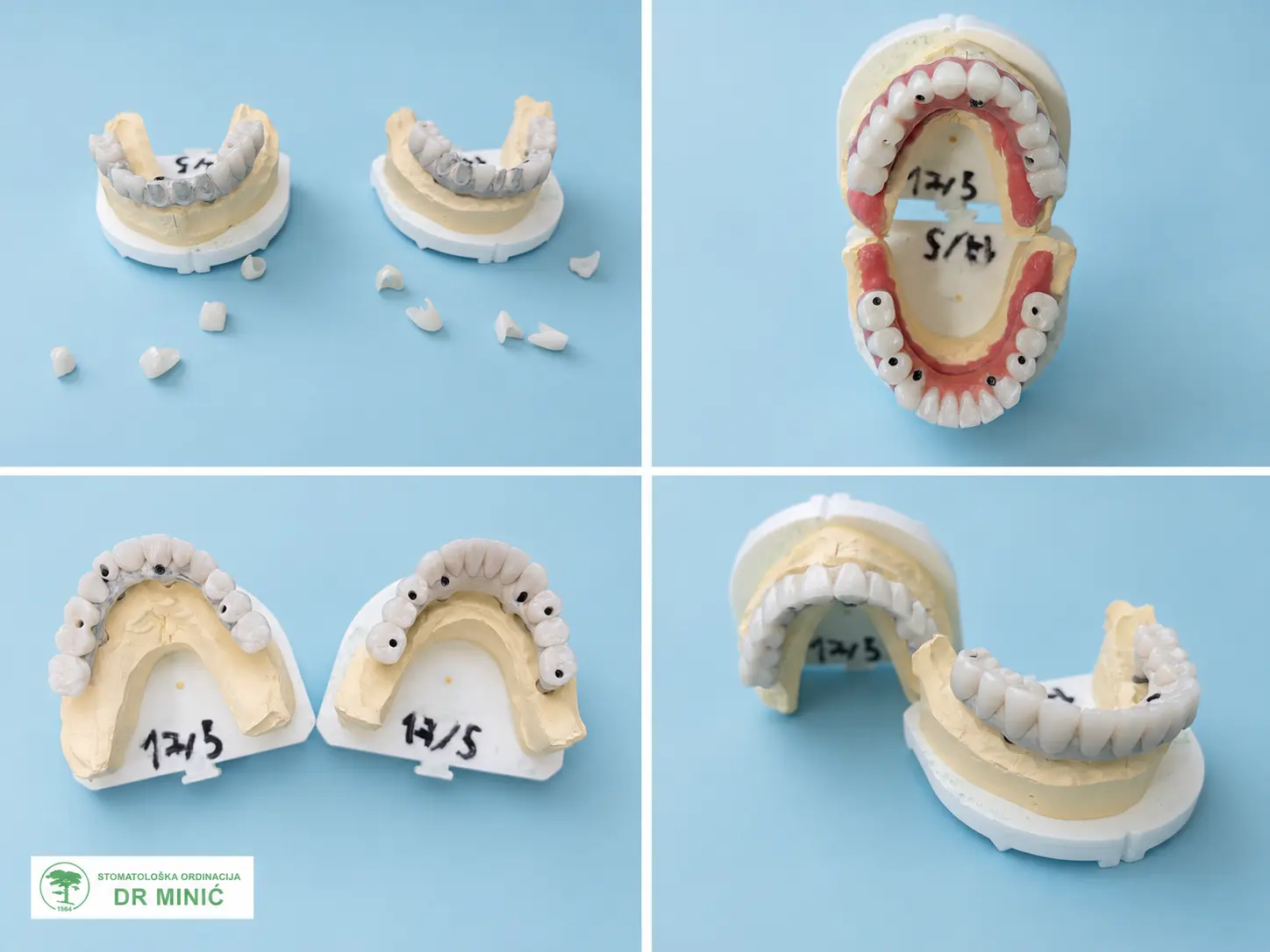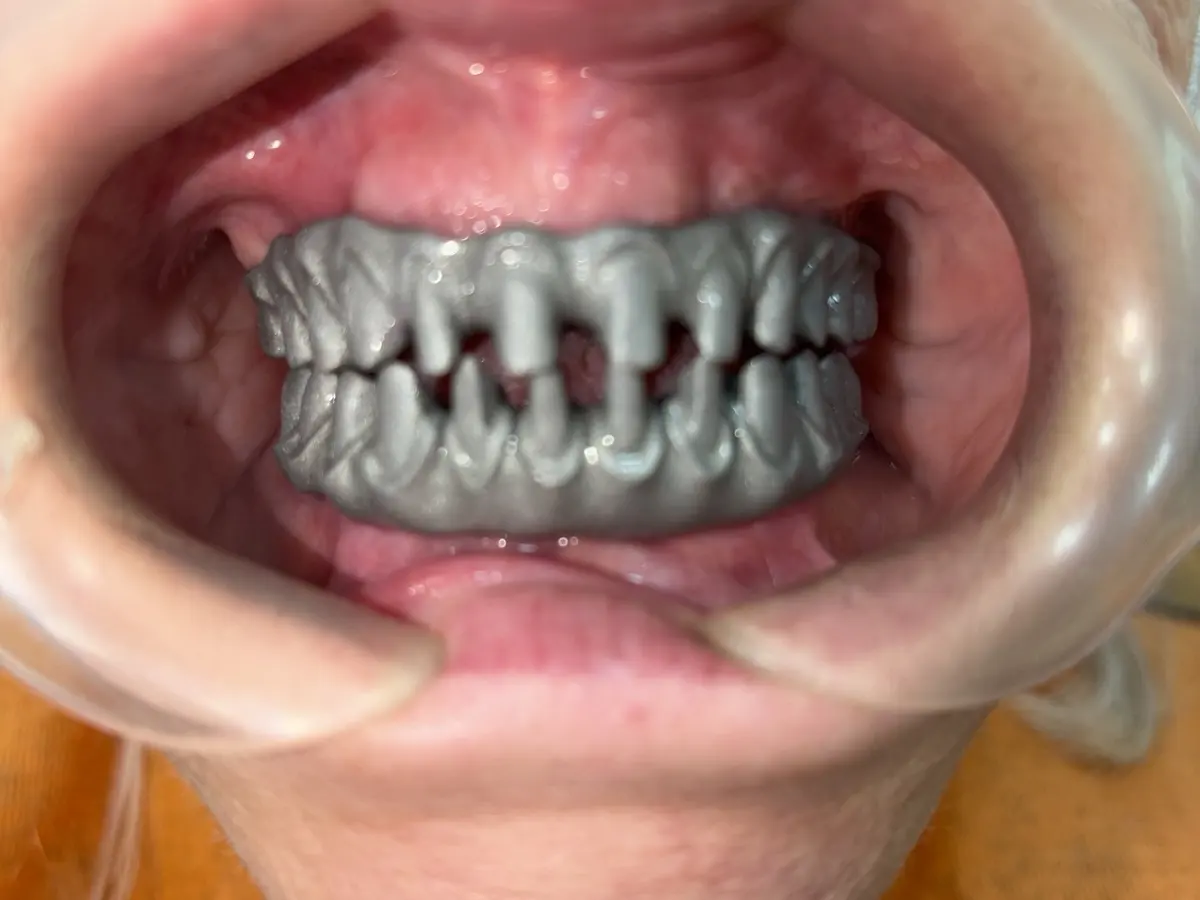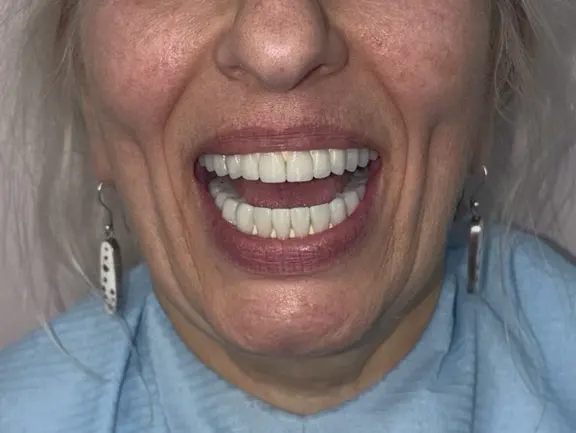
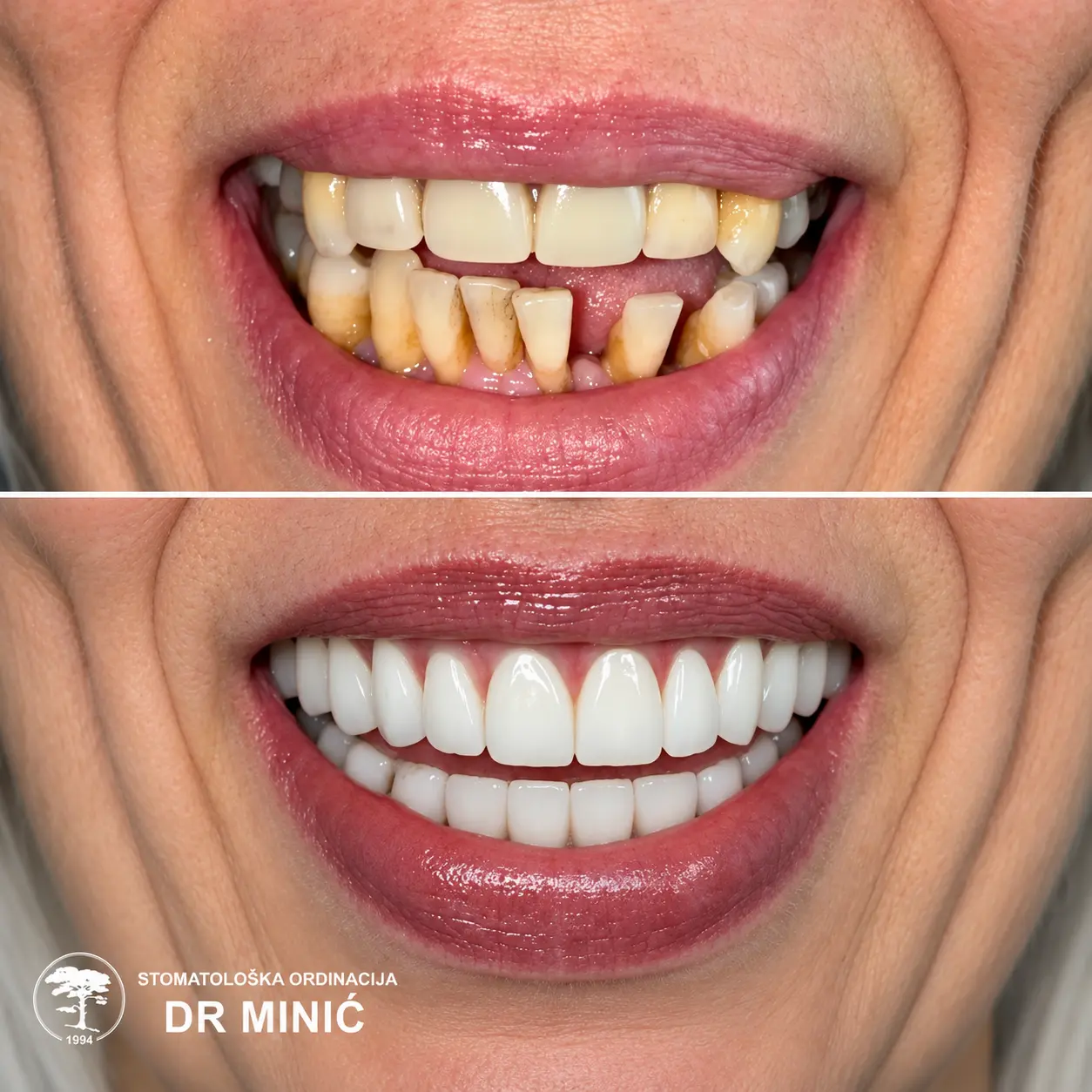


This case study presents complete rehabilitation of the upper and lower jaws in a female patient with advanced periodontal disease. The problem was not purely aesthetic. Loose teeth and an altered bite also made chewing difficult, requiring a comprehensive implant and prosthetic solution.
Clinical diagnosis
Examination revealed advanced periodontal disease in both jaws. The teeth were weakened, loose and displaced from their correct positions. This affected the appearance of the smile and made chewing difficult.
Following diagnostic assessment, it was concluded that the remaining teeth had a poor prognosis and that full implant treatment was the most suitable solution. You can read more about this treatment on the dental implants page.
Treatment
Stage one – treatment planning
The aim was to restore a stable smile, improve chewing function and achieve a natural tooth appearance. The plan involved extracting teeth that could not be saved, placing implants and making a fixed implant-supported restoration.
Stage two – tooth extraction and implant placement
After the remaining teeth were extracted, implants were placed in both jaws during the same appointment. The All-on-4 method was used in the upper jaw, meaning the fixed restoration is supported by four implants. The All-on-6 method was used in the lower jaw, with six implants supporting the restoration. This provides additional stability and better distribution of chewing forces.
Stage three – temporary teeth immediately after surgery
The patient received temporary teeth immediately after surgery. This is important because it ensures the patient is not left without teeth during healing.
Stage four – healing and preparation for the final restoration
During the four-month healing period, the implants stabilised in the bone. Once this process was complete, we began making the final prosthetic restoration. Particular attention was paid to tooth shape, colour, the bite and a natural-looking smile.
Stage five – the final fixed restoration
At the end of treatment, the final fixed implant-supported restoration was made with a titanium bar to provide additional strength and stability. Artificial gingiva was also added to replace the appearance of the gums in areas affected by recession and tissue loss.
The final restoration was made with high-quality all-ceramic crowns, contributing to a natural, attractive smile.
Treatment result
Treatment achieved complete aesthetic and functional rehabilitation of both jaws. The patient received a stable fixed implant-supported restoration, a more attractive and natural-looking smile, and significantly improved chewing function. Problems caused by advanced periodontal disease, including tooth displacement, instability and impaired aesthetics, were addressed through comprehensive implant and prosthetic treatment.
The treatment cost depends on the number of implants, implant system, bone condition and type of final restoration. More detailed information is available on the dental implant prices page.