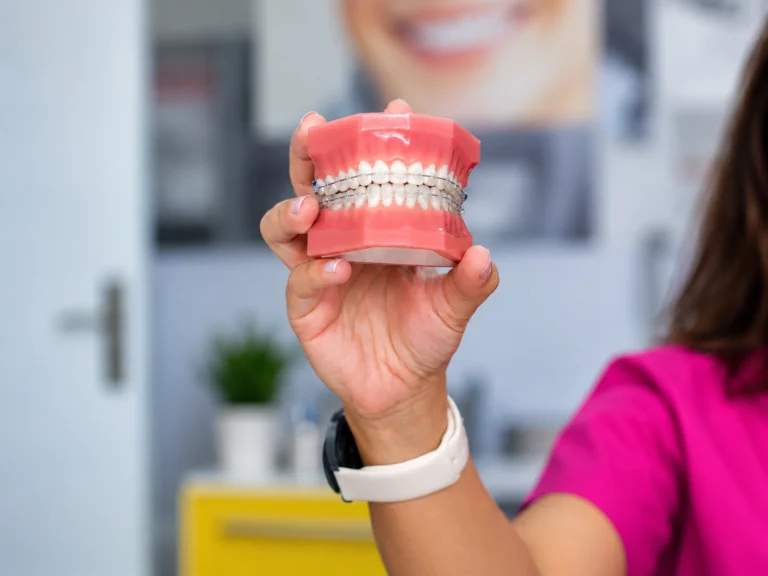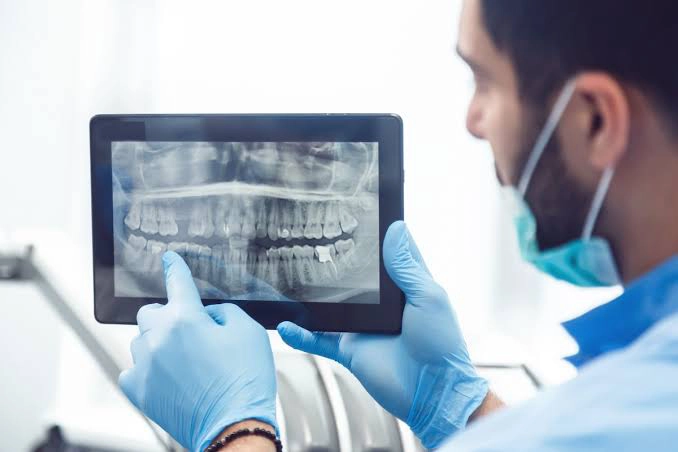
Having fixed braces removed is a moment most patients eagerly await. The teeth are aligned, the smile has changed, and brackets and wires are no longer part of everyday life. However, the end of active tooth movement does not mean the end of orthodontic treatment.
After the braces are removed, the retention phase begins – a period during which the teeth are held in their new position while the surrounding tissues adapt to the change. This is precisely why a retainer is used.
A retainer is an orthodontic appliance that helps keep teeth in the position achieved during treatment and reduces the risk of them moving again. Using it correctly and consistently is one of the most important steps in preserving the results of fixed braces.
What is a retainer?
A retainer is an appliance used after active orthodontic treatment has finished. Unlike fixed braces or clear aligners, which move the teeth, a retainer has a different role: to stabilise their new position.
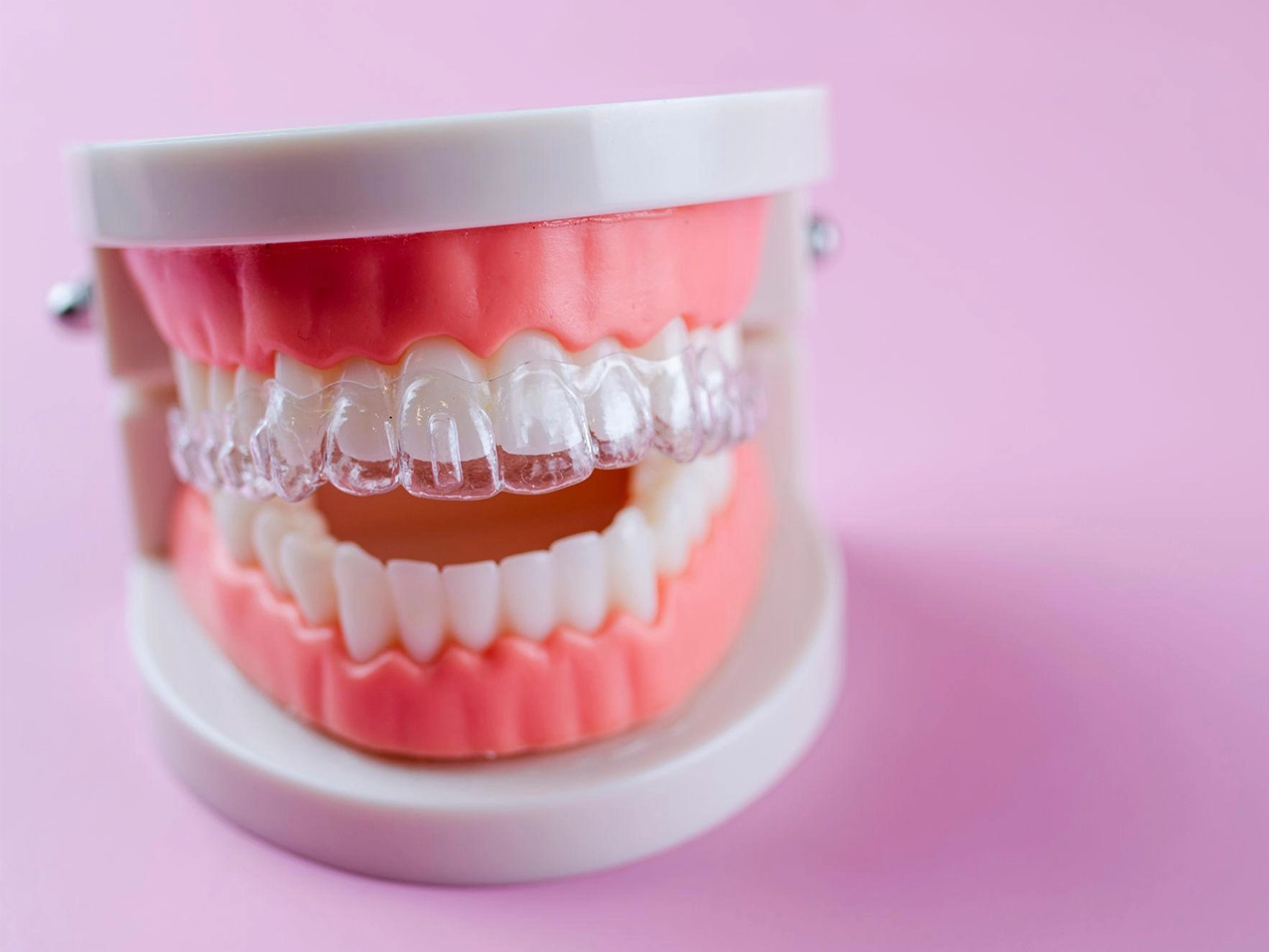
A retainer may be fixed, consisting of a thin wire attached to the inner surfaces of the teeth, or removable, most commonly a clear appliance that fits over the teeth and is removed according to the orthodontist’s instructions.
For some patients, the orthodontist may recommend a combination of fixed and removable retainers, depending on the initial misalignment, the result achieved and the assessed risk of the teeth moving again.
Why must a retainer be worn after fixed braces?
During orthodontic treatment, the teeth gradually move through the jawbone. Although they have reached the desired position by the end of treatment, the surrounding bone, periodontal fibres and soft tissues do not adapt to that new position immediately.
There is therefore a natural tendency for some teeth to move over time. This movement is known as orthodontic relapse.
A retainer gives the teeth stability while the surrounding tissues reorganise, but it is important to understand that tooth positions can change throughout life. Retention is therefore considered an integral part of treatment, rather than a short-term addition.
Why do teeth move again?
Tissues need time to adapt
After the teeth have moved, the surrounding fibres and tissues retain a “memory” of their previous position for a while. The risk of unwanted movement is therefore particularly high in the early period after braces are removed.
The tongue, lips and cheeks constantly exert forces on the teeth
Tooth position is not determined by the orthodontic appliance alone. The tongue, lips and cheeks, chewing patterns and various habits exert forces on the teeth every day. A strong habit such as tongue thrusting may mean the treatment result needs extra attention and long-term retention.
Teeth naturally change throughout life
Even people who have never worn an orthodontic appliance can experience gradual changes in tooth position over the years. Properly aligned teeth are therefore not completely “locked” into one position after treatment.
What types of retainers are available?
The two main types most commonly used are fixed and removable retainers. The choice depends on the individual situation, and each option has its own advantages and maintenance requirements.
Fixed retainers
A fixed retainer is a thin wire usually placed on the inner surfaces of the front teeth. It is bonded to the teeth and cannot be removed by the patient.
Its main advantage is that it works continuously and does not depend on the patient remembering to put it in. Because it is on the inner surfaces, it is virtually invisible when speaking or smiling.
However, a fixed retainer requires careful cleaning, especially around the wire and the points where it is bonded to the teeth.
Removable retainers
A removable retainer can be inserted and removed by the patient. Clear retainers that resemble thin transparent trays are very commonly used today.
A removable retainer is easy to take out for eating and brushing, but its effectiveness depends directly on patient compliance. If it is not worn as instructed by the orthodontist, the teeth may begin to move.
Fixed or removable retainer – which is better?
No single type of retainer is best for every patient. The orthodontist chooses the form of retention based on the condition and previous position of the teeth, how they were moved and the expected risk of relapse.
| Feature | Fixed retainer | Removable retainer |
|---|---|---|
| Wear | Remains bonded to the teeth | Inserted and removed by the patient |
| Visibility | Not visible from the outside | Usually discreet and transparent |
| Patient compliance | Does not need to be inserted each day | Results depend on consistent wear |
| Hygiene | Requires more careful cleaning around the wire | Can be removed and cleaned separately |
| Check-ups | The wire needs to be checked for stability | The appliance needs to be checked for proper fit |
Some patients may use both approaches – for example, a fixed wire for the front teeth alongside a removable retainer worn according to the recommended schedule. The orthodontist makes the final decision after assessing the individual case.
How long should you wear a retainer?
This is one of the most common questions after fixed braces are removed, but there is no universal wearing schedule that applies to every patient.
For removable retainers, the orthodontist may initially recommend more intensive wear, followed by a gradual transition to night-time wear. For many patients, retention is long term because teeth can change even after several years.
The most important thing is to follow your orthodontist’s individual instructions. Reducing wear time or stopping retainer use without advice can increase the risk of losing some of the results achieved.
What can happen if you do not wear your retainer?
If a removable retainer is not used as recommended, or a problem with a fixed retainer is ignored for a long time, the teeth may begin to move. Sometimes the change is very small, but in some patients it can become noticeable relatively quickly.
Possible changes include:
- renewed crowding of the front teeth
- reopening of previously closed gaps
- rotation of individual teeth
- changes in how the teeth meet when biting
- partial loss of the results of orthodontic treatment
If the teeth move significantly, it may no longer be possible simply to put the old retainer back in. In these situations, the orthodontist assesses whether another phase of corrective treatment is needed.
How should you care for a removable retainer?
Good retainer hygiene is important both for the appliance’s lifespan and for the health of the teeth and gums.
- rinse and clean your retainer regularly according to your orthodontist’s instructions
- do not use very hot water, as it can distort the clear material
- keep it in a protective case when you are not wearing it
- do not leave it unprotected on a table or wrapped in a tissue
- book a check-up if the retainer becomes distorted, cracks or no longer fits properly
At check-ups, the orthodontist can assess whether the appliance still fits correctly and whether a new one is needed.
How should you care for teeth with a fixed retainer?
Because the wire remains bonded to the inner surfaces of the teeth, plaque and food debris can accumulate around it if cleaning is not thorough enough.
It is therefore important to brush carefully, clean between the teeth with suitable interdental cleaning aids and attend regular dental check-ups. For patients with a fixed retainer, it is particularly useful for the dentist to check gum health, tartar build-up and the stability of the wire itself.
What if a fixed retainer comes loose?
If you notice that the retainer has detached from a tooth, the wire moves or it has broken, it is best to contact your orthodontist as soon as possible.
Even if most of the wire is still in place, a tooth that is no longer stabilised may begin to move. The problem should therefore not be left until the next routine check-up.
What if you lose or break a removable retainer?
A removable retainer can be lost, cracked or distorted. In this situation, it is not advisable to wait for weeks without retention. The sooner you contact your orthodontist, the more likely it is that a new retainer can be made before significant tooth movement occurs.
If your old retainer suddenly no longer fits or feels very tight, do not force it back in without seeking advice. This may indicate that the teeth have moved or that the appliance itself has become distorted.
What do check-ups involve after fixed braces are removed?
Orthodontic treatment does not end with the final appointment while wearing braces. After the appliance is removed, check-ups are scheduled throughout the retention phase.
At these appointments, the orthodontist can check:
- whether the teeth have remained stable in their new position
- whether the removable retainer fits correctly
- whether the fixed retaining wire is securely bonded
- the condition of the bite
- oral hygiene and gum health
- whether the removable retainer wearing schedule needs to be adjusted
Check-ups are particularly important if you notice a new gap appearing between the teeth, a tooth changing position or a retainer that no longer fits as it used to.
Is a retainer also needed after clear aligners?
Yes. Retention is not limited to fixed braces. After treatment with clear orthodontic aligners, the teeth also need to be stabilised in their new position.
Patients who have straightened their teeth with aligners therefore also receive a retention plan tailored by the orthodontist to the result achieved.
A retainer is part of treatment, not an optional extra afterwards
Fixed braces or clear aligners move the teeth into better alignment, while a retainer preserves that result. The retention phase is therefore just as important for long-term orthodontic success as wearing the appliance itself.
Correct retainer use, good oral hygiene and regular check-ups help reduce the risk of teeth moving again and keep the results of orthodontic treatment stable for as long as possible.
Have you finished orthodontic treatment or are you having a problem with your retainer?
If you have finished treatment with fixed braces, lost your removable retainer or noticed that your fixed retaining wire has come loose, book a check-up at Dr Minić Dental Clinic. An orthodontic specialist can assess the stability of your tooth positions and recommend a suitable retention approach for your case.