Orthodontic treatment is often associated with childhood and the teenage years, but the need for properly positioned teeth and a functional bite does not end when growth is complete. Modern orthodontics can correct tooth positions at different stages of life – from early childhood through adolescence to adulthood.
The aim of treatment is more than a better-looking smile. Properly aligned teeth can make oral hygiene easier, improve chewing function and create better conditions for other dental procedures, including prosthetic and implant treatment.
However, the orthodontic plan for an eight-year-old child is not the same as for an adult in their forties or fifties. Age, jaw development, the condition of the teeth and gums, existing restorations and the type of misalignment directly affect the choice of treatment.
When is the right time for a first orthodontic examination?
A first orthodontic examination does not necessarily mean that treatment will start immediately. Its purpose is to assess jaw growth and development, tooth eruption and any irregularities that may benefit from monitoring or correction at the right time.
In children, particular attention is paid to signs such as:
- insufficient space for teeth to erupt properly
- early or delayed loss of baby teeth
- significant crowding or rotated teeth
- an open bite, deep bite or crossbite
- an incorrect relationship between the upper and lower jaws
- prolonged thumb sucking or other oral habits
- mouth breathing and tongue posture that may affect jaw development.
An early examination allows the orthodontist to assess whether development simply needs to be monitored or whether treatment would be beneficial while jaw growth can still be influenced.
Orthodontic treatment for children
Why is the growth period important?
A child’s jaws are not yet fully developed. In certain cases, orthodontic treatment can therefore have a different goal than in adults: not only moving the teeth, but also guiding jaw development and creating better conditions for the permanent teeth to erupt.
This is why dentofacial orthopaedics is particularly important during growth. Identifying an incorrect jaw relationship in good time allows treatment to be planned at a stage when development can still be guided.
Removable orthodontic appliances
Depending on the problem and the child’s age, removable orthodontic appliances may be used. They can be taken out of the mouth, and their effectiveness depends largely on consistent wear as recommended by the orthodontist.
A removable appliance is not a universal solution for every irregularity. Its use depends on tooth and jaw development, the type of problem and the goal of treatment.
When does a child move on to fixed braces?
Treatment with fixed braces is usually planned when enough permanent teeth are present and more precise movement in several directions is needed. The exact starting point is determined not only by the child’s age, but also by dental development and the orthodontic problem to be addressed.
Orthodontic treatment during the teenage years
Adolescence is a common time for comprehensive orthodontic treatment. Most permanent teeth have erupted, and many patients still have growth potential that the orthodontist can take into account when planning treatment.
The most commonly corrected problems at this age include:
- crowded and rotated teeth
- gaps between the teeth
- incorrect positioning of the canines and other permanent teeth
- bite irregularities
- the relationship between the upper and lower jaws where growth can still be influenced.
Oral hygiene and patient cooperation also play a major role. With fixed braces, the areas around the brackets and archwire need more careful cleaning. With removable appliances and clear aligners, results also depend on how consistently the patient follows the instructions.
Can adults straighten their teeth?
Yes. Orthodontic treatment is not reserved for children and teenagers. Teeth can also be moved orthodontically in adulthood, provided the teeth, gums and supporting tissues are healthy enough for treatment to be carried out safely.
In adults, jaw growth can no longer be relied upon as it can in children. Treatment therefore generally focuses on tooth positions, the bite and the relationship of the teeth to existing restorations or a future rehabilitation plan.
Why do adults most often start orthodontic treatment?
Aesthetic reasons
For many adults, the first motivation is the appearance of their smile. Crowded, rotated or spaced teeth can affect confidence and the appearance of the smile, so patients often seek a more discreet way to correct them.
Functional reasons
Incorrect tooth positions can make oral hygiene more difficult, contribute to uneven loading of individual teeth or complicate the planning of a prosthetic restoration. Adult orthodontics is therefore often about more than aesthetics.
Orthodontics as preparation for implants and prosthetic treatment
If a tooth has been missing for a long time, adjacent teeth may tilt or move into the empty space. In this situation, it may not be possible to place an implant and crown in the ideal position straight away.
Orthodontic treatment can then help move the teeth into a better position and create space for a future implant or prosthetic restoration. In this way, orthodontics, implantology and prosthetics become parts of the same rehabilitation plan.
What options does modern orthodontics offer?
Fixed braces
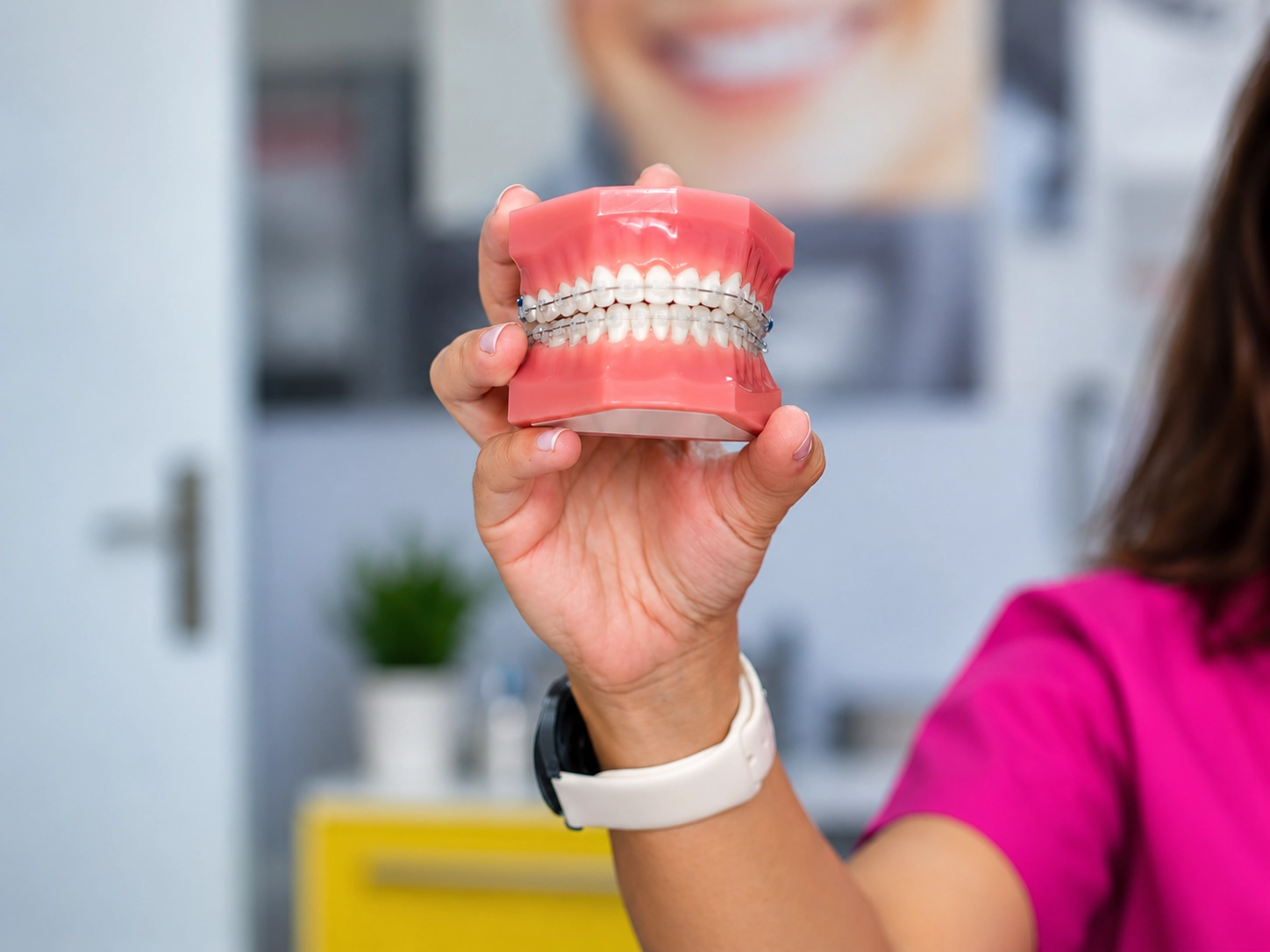
A fixed orthodontic appliance consists of brackets attached to the teeth and an archwire that enables controlled tooth movement. During treatment, the orthodontist adjusts the forces and direction of movement according to the plan.
Fixed braces allow precise control of tooth positions and can be used for a wide range of orthodontic irregularities.
Clear aligners
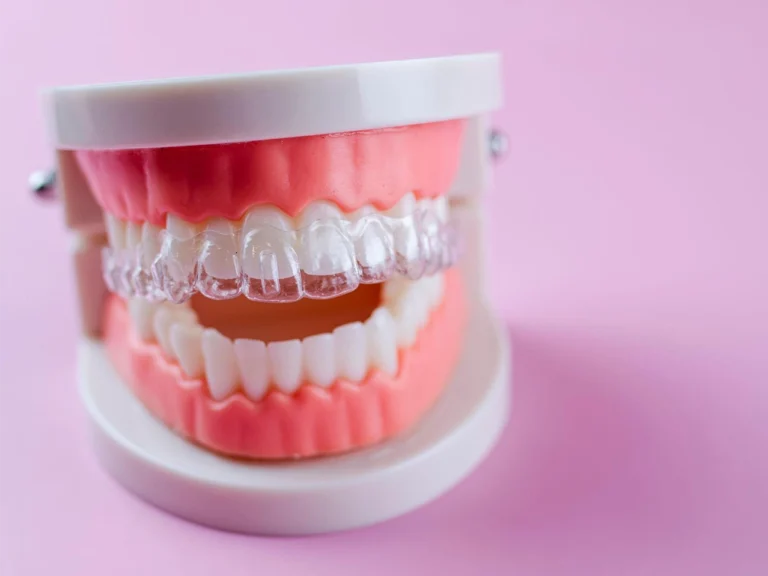
Clear orthodontic aligners are a series of custom-made trays that gradually move the teeth towards their planned positions. They are removed for eating and brushing, which can make oral hygiene easier.
Their main advantage is their discreet appearance, which makes them appealing to adult patients. However, aligners require consistent wear, and not every type of irregularity or every patient is equally suitable for this treatment.
Fixed braces or clear aligners – how is the choice made?
The best treatment is not the most popular one, but the one that suits the specific orthodontic problem, the patient’s lifestyle and their ability to follow the treatment requirements.
| Feature | Fixed braces | Clear aligners |
|---|---|---|
| Wear | Remain in place throughout treatment | Removed for eating and oral hygiene |
| Patient compliance | Do not depend on remembering to insert them each day | Results depend largely on consistent wear |
| Use | Can be used for a wide range of irregularities | Suitability depends on the type and complexity of the case |
| Visibility | More visible | More discreet |
| Hygiene | Require more careful cleaning around the brackets | Allow easier brushing when the aligners are removed |
Does orthodontic treatment change with age?
Yes. Although the main goal is always a more functional and better-aligned relationship between the teeth, treatment options depend on age and the stage of development.
- In children, the focus is often on jaw development, tooth eruption and early management of irregularities.
- In teenagers, the position of the permanent teeth and the bite are most commonly corrected, making use of any remaining growth potential where possible.
- In adults, the focus is on the position of fully developed teeth, function, aesthetics and often preparation for prosthetic or implant treatment.
Orthodontics for patients in their forties, fifties and beyond
Age alone is not a reason to rule out orthodontic treatment. The condition of the teeth and their supporting tissues is much more important.
Before starting treatment in adults, the following need to be assessed:
- gum health and the presence of periodontal disease
- bone levels around the teeth
- existing crowns and bridges
- the presence of implants
- missing teeth
- bite stability and overall oral health.
In more complex cases, orthodontic treatment is therefore planned in collaboration with other dental disciplines.
What if the patient already has crowns, bridges or implants?
Existing prosthetic restorations do not automatically rule out orthodontic treatment. A natural tooth with a crown can still be moved orthodontically under suitable conditions.
An implant is different. After osseointegration, it is firmly connected to the bone and does not move orthodontically in the same way as a natural tooth. Its position must therefore be taken into account when planning movement of the surrounding teeth.
This is precisely why patients with both orthodontic and implant or prosthetic needs require a comprehensive treatment plan before individual procedures begin.
How long does teeth straightening take?
The duration of orthodontic treatment varies from patient to patient. A simple correction of a few teeth naturally takes a different amount of time from a complex bite correction.
Factors that can affect treatment duration include:
- the type and complexity of the irregularity
- the extent of tooth movement required
- age and the biological response of the tissues
- the chosen orthodontic appliance
- patient compliance with removable appliances and aligners
- regular attendance at check-ups and adherence to recommendations.
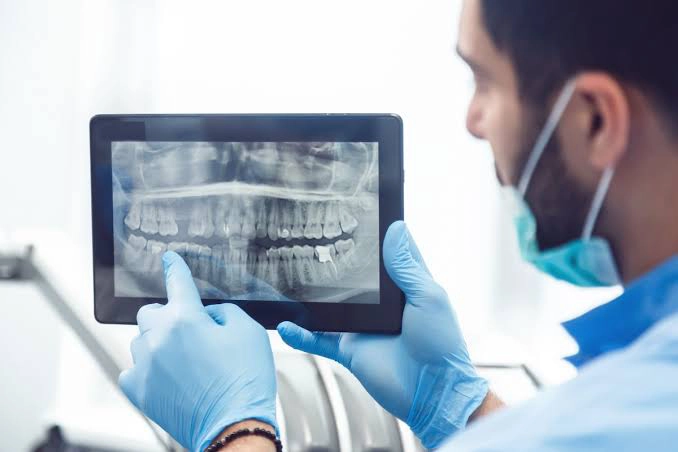
A more precise estimate is only possible after an examination, bite analysis and the necessary diagnostic assessments.
Does orthodontic treatment hurt?
After fixed braces are fitted, the archwire is changed or a new clear aligner is introduced, temporary sensitivity and a feeling of pressure in the teeth may occur. This is related to the forces that move the teeth and is usually more noticeable during the first few days after an adjustment.
The intensity varies between patients, and the orthodontist can offer advice on making the initial treatment period more comfortable.
Oral hygiene during orthodontic treatment
Regardless of the appliance used, good oral hygiene is one of the basic requirements for successful orthodontic treatment.
With fixed braces, the areas around the brackets and between the teeth need careful cleaning. With aligners, the teeth are brushed after the trays are removed, and the aligners themselves are cleaned regularly according to the orthodontist’s recommendations.
Regular dental and orthodontic check-ups help identify tooth decay, gum inflammation and other problems that could affect treatment in good time.
What happens after teeth have been straightened?
Removing fixed braces or finishing the last set of aligners is not the end of orthodontic treatment. Teeth have a natural tendency to change position, particularly immediately after the active treatment phase.
This is followed by a retention phase, during which fixed or removable retainers are used to preserve the result achieved.
Read more about this phase in our article “What Is a Retainer and Why Is It Important After Braces?”
Modern orthodontics is not limited to one age group
Children, teenagers and adults have different orthodontic needs, but there may be a reason to assess tooth positions and the bite at any stage of life.
In children, the advantage is the opportunity to monitor and guide jaw development. Teenagers often undergo comprehensive correction of permanent tooth positions, while adult orthodontics is increasingly combined with cosmetic dentistry, prosthetics and implantology.
Modern orthodontic treatment is therefore planned according to the patient’s oral health, the type of irregularity, treatment goals and the possibilities of the individual case, rather than age alone.
Thinking about straightening your teeth?
An orthodontic examination assesses tooth positions, the relationship between the jaws, the bite and the condition of the supporting tissues. An individual treatment plan is then created to suit the patient’s age and needs.
Book an orthodontic examination at Dr Minić Dental Clinic in Belgrade to find out which modern orthodontic option suits your case.